
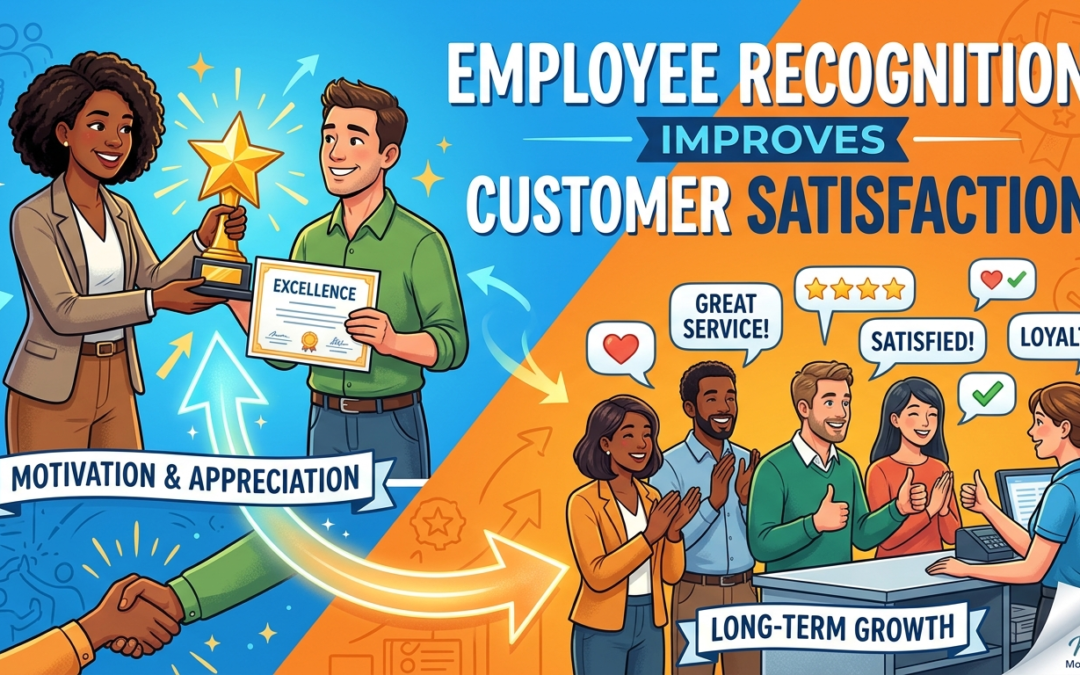
Summary: Employee recognition plays a direct role in shaping customer experiences. Businesses that invest in appreciation often see stronger engagement, better service quality, and improved loyalty. Understanding how to improve workplace culture and focusing on improving company culture through recognition helps organizations build motivated teams that consistently deliver value to customers.
The success of businesses depends on the motivation of employees who feel valued. When leaders know how to enhance workplace culture, they will provide a workplace where employees feel engaged and dedicated to customer results. This process is highly fueled by recognition, and it plays a great role in enhancing the culture of a company and reinforcing customer relations.
The Link Between Employee Recognition and Customer Satisfaction
Rewarding employees leads to a positive loop. Employees who are valued dedicate more effort to their job. This enhanced perspective directly affects improved customer interactions.
There is increased enthusiasm, improved communication, and problem-solving skills among recognized employees. These characteristics directly influence customer experiences. Customers experience more attentive service, faster responses, and greater empathy.
Companies that work on improving company culture by better recognizing and rewarding employees tend to record quantifiable improved customer satisfaction and retention rates and more repeat business.
How Recognition Enhances Employee Engagement?
Creating a Sense of Value
Rewards help to strengthen the notion that employees are important. By appreciating contributions made by employees, the leaders make them feel respected and valued. This emotional attachment makes them ready to go beyond the minimum responsibilities of their jobs.
Employees become are more attentive to detail. They pay attention to the needs of the customers and react to those needs faster. Such a degree of service creates trust and reinforces relationships with customers.
Encouraging Ownership and Accountability
Recognition fosters ownership. Appreciated employees are proud of their work. They are responsible and strive to achieve the same quality in their duties.
This type of behavior enhances customer interactions. The employees address the issues with a sense of confidence and are also professional in problematic situations.
Building Stronger Customer Relationships Through Recognition
Consistency in Service Delivery
Customers desire regular service. Employees are motivated through recognition programs to operate at high standards. Employees will work to deliver quality performances when they realize that their hard work will be noticed, recognized and rewarded.
Consistency builds reliability. Customers will repeat working with businesses they have confidence in, and recognition contributes to that confidence.
Emotional Connection with Customers
Positive emotions are usually expressed by recognized employees. They speak in a more caring and sincere manner. This authenticity is recognized by the customers and provokes greater emotional connection.
Customer loyalty is affected by these connections. Pleased customers spread good news, which improves the company’s brand image.
Recognition as a Tool for Motivation
Intrinsic Motivation Drives Better Service
Intrinsic motivation which is how employees feel valued is achieved through individual recognition for work well done. When employees are appreciated for their efforts, they are internally motivated to perform better.
Motivated employees act on their own initiative. They make predictions on what customers require and offer solutions beforehand. This leads to enhanced customer experience.
Reducing Burnout and Increasing Productivity
Awareness decreases stress and burnout. Feeling supported, employees have increased energy levels. During their working hours, they are less distracted, and they are more productive.
Motivated employees better attend to customer requests. The quicker response time enhances satisfaction and builds trust with employees.
Practical Ways to Implement Employee Recognition
Personalized Recognition
Leaders must be able to customize recognition to the preferences of their employees. For example, there are those employees who would like to receive public recognition, and there are those who would prefer to receive private feedback.
Individualized credit enhances influence. The employees are made to feel truly valued, improving their motivation and involvement.
Timely Appreciation
The best forms of recognition are provided as soon as possible. Rewards should be given as soon as possible to reinforce positive behavior and results.
A culture of responsiveness is also created with timely recognition. Desired behavior is reinforced in the customer interactions by employees, resulting in quicker and more efficient delivery of services.
Peer to Peer Recognition
Promoting staff to recognize one another promotes a supportive environment. Mutual respect and collaboration are developed through peer recognition.
Supportive teams are more effective. Team collaboration is seen in the quality of customer service and customer satisfaction.
How Leadership Shapes Recognition Culture
Leadership is very important in instilling recognition in organizational practices. Leaders who are active in appreciating their employees are critical for establishing a recognition culture.
Managers need to incorporate recognition in their day-to-day operations. Even the simplest of gestures like thanking employees and recognizing rewarding effort at meetings or providing constructive feedback can leave a lasting impression.
Companies that know how to improve workplace culture tend to put more emphasis on the role of leadership in recognition programs. This helps to provide consistency and authenticity.
The Role of Recognition in Improving Customer Experience
Encouraging Proactive Behavior
Appreciation motivates workers to be self-driving. They seek avenues to improve customer experiences instead of simply taking orders.
Early identification of potential problems is done by proactive employees. They deal with issues before they go out of control, thus enhancing customer satisfaction.
Strengthening Communication Skills
Feeling valued, employees are more effective communicators. They have more meaningful dialogues and are better at providing timely information the customer can use.
Good communication minimizes misinterpretations. The customers feel informed and appreciated, and this enhances their trust with the business.
Long Term Impact on Business Growth
Companies that invest in the appreciation of their employees create better work cultures. As they stick with it, their culture further improves.
Good cultures help in attracting and retaining talent. Experienced employees will provide better service and, hence, a happy customer base and higher revenues.
Companies that strive to improve their company culture have a tendency of doing better than their competition in better retaining their employees and maintaining customer loyalty.
Challenges in Employee Recognition and How to Overcome Them
Lack of Consistency
Inequalities in recognition undermine performance. The consistency of appreciation is essential for making all employees feel respected.
Leaders need to put in place clear expectations for its leaders with suitable forms of accountability. Clear expectations promote equity and uniformity.
Generic Recognition
Generic appreciation tends to not work well. It is insincere so less effective.
Leaders need to be specific when recognizing employees. Appreciation is made significant by mentioning specifics , that is, what was done, and the obtained results.
Measuring the Impact of Recognition on Customer Satisfaction
Companies should monitor the results of recognition programs. Such metrics as customer feedback, retention rates, and employee engagement scores are valuable measures of success.
Frequent review assists in perfecting plans. Companies are able to determine what works—and what does not—and modify strategies to achieve the greatest effect.
Conclusion
Employee recognition serves as a strategic tool for business success. It strengthens employee engagement, enhances service quality, and builds lasting customer relationships. Leaders who focus on how to improve workplace culture create environments where employees feel valued and motivated. This approach not only supports improving company culture but also drives consistent customer satisfaction. Businesses that prioritize recognition position themselves for long term growth and stronger market presence.
Transform your workplace into a culture of recognition and results with Nelson Motivation Inc. start your journey today
FAQ
1. What is employee recognition in business?
Employee recognition occurs when individual employees are thanked and recognized for their achievements. It contributes to improved morale and motivates people to perform better.
2. How does employee recognition affect customer satisfaction?
Recognizing employees for effective customer service improves that service and increases customer satisfaction. Improved employee engagement brings about improved customer experience.
3. What are effective ways to recognize employees?
Best practices include one-on-one appreciation and feedback in person, in writing or in public. Peer recognition is also valued by most employees.
4. Why is workplace culture important for customer experience?
Workplace culture has an impact on the behavior of employees. A positive work culture helps to motivate employees to offer uniform service that is of high quality.
5. How can businesses measure recognition impact?
To measure recognition effectiveness, businesses can use an employee engagement survey, customer feedback, and employee retention rates. When greater clarity is needed, focus groups and pulse surveys can also be deployed.
Recent Comments